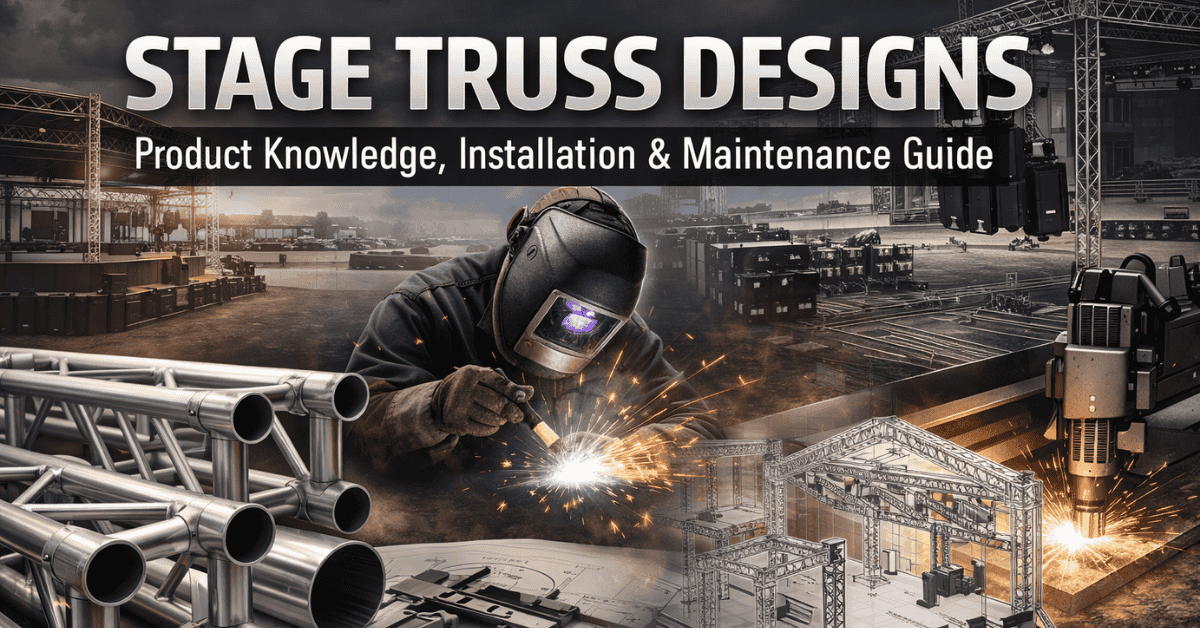

Stage truss designs form the structural backbone of modern event production, supporting everything from lighting systems and LED screens to sound equipment and roof structures. Whether applied in outdoor festivals, indoor concerts, exhibitions, or immersive 3D stage environments, the performance of a stage truss system depends not only on its design, but also on correct installation and proper long-term maintenance.
This article provides a comprehensive product knowledge overview of stage truss designs, combined with professional installation and maintenance guidance, helping event planners, rental companies, and technical teams make informed decisions while ensuring safety, reliability, and durability.
Understanding Stage Truss Designs: Core Structural Concepts
At its core, a stage truss is a modular aluminum structural system engineered to carry loads safely while remaining flexible and reusable. Unlike decorative frameworks, stage truss designs are governed by structural mechanics, load paths, and connection integrity.
Most professional truss systems are manufactured from high-grade aluminum alloy (typically 6082-T6) due to its optimal balance of strength, corrosion resistance, and lightweight handling. The geometry of the truss—combined with tube diameter, wall thickness, and bracing layout—determines its load-bearing capacity and application range.
Well-designed stage truss systems allow for:
-
Predictable load distribution
-
Fast modular assembly
-
Compatibility across different configurations
-
Long service life under repeated use
Key Types of Stage Truss Designs and Their Applications
Outdoor Stage Designs
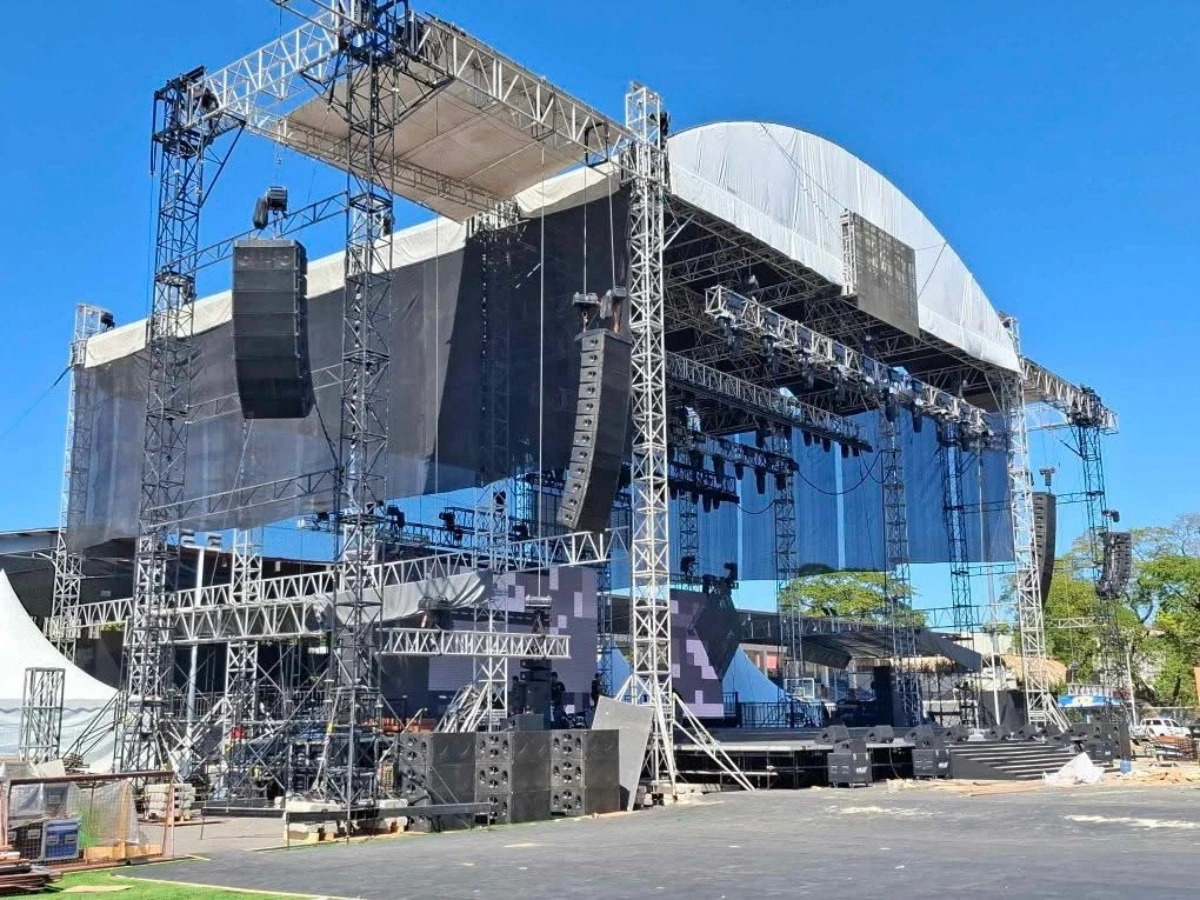
Outdoor stage designs must withstand environmental forces such as wind, rain, and temperature changes. These systems typically integrate roof trusses, ground support towers, and reinforced connections.
Key characteristics include:
-
Larger spans and higher load ratings
-
Roof truss systems designed for weather protection
-
Compatibility with ballast or anchoring systems
-
Corrosion-resistant surface treatments
Proper installation and inspection are critical in outdoor applications, as environmental loads can change rapidly.
Lighting Truss Designs
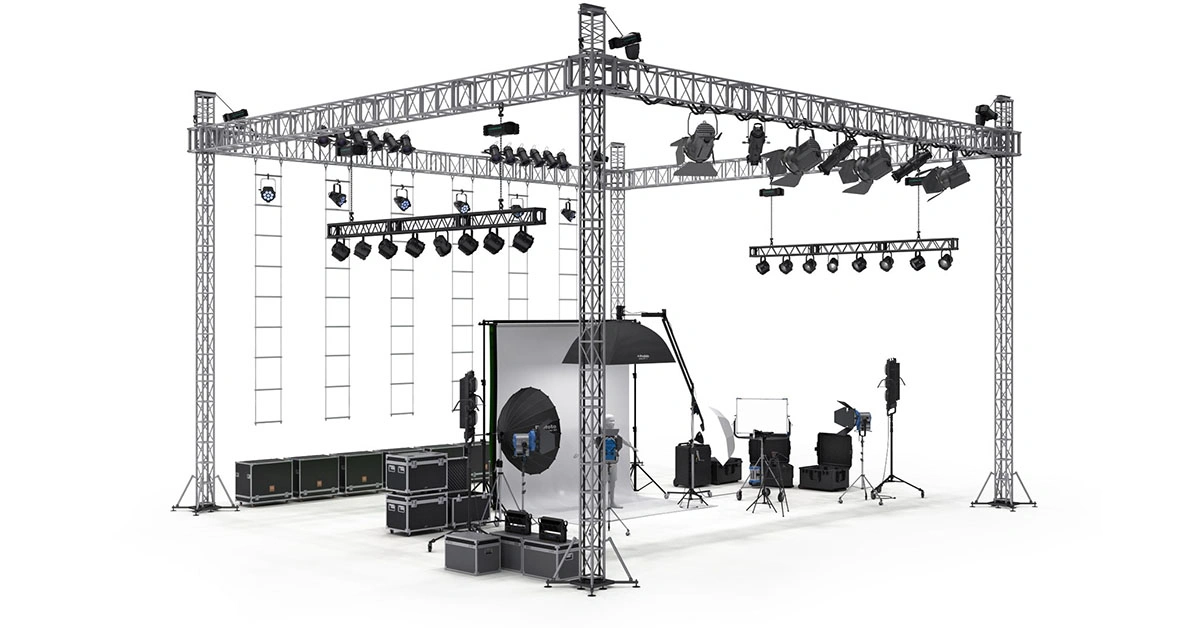
Lighting truss designs focus on precision, balance, and safety. These trusses are optimized for hanging moving lights, LED bars, speakers, and effects equipment.
Important design considerations:
-
Uniform load distribution across spans
-
Accurate connection alignment to prevent torsion
-
Compatibility with rigging hardware
-
Ease of adjustment during setup
Because lighting loads are often dynamic, installation accuracy directly impacts system stability and performance.
3D Stage Designs
3D stage designs combine traditional truss engineering with visual creativity and digital planning. These systems often include curved trusses, multi-level structures, and complex spatial layouts.
From a product knowledge perspective, 3D designs require:
-
CAD-based pre-engineering
-
Modular compatibility between straight and curved elements
-
Precise installation sequencing
-
Clear load calculations for non-standard geometries
Maintenance is especially important in 3D systems, as stress points may differ from conventional layouts.
Installation Principles for Professional Stage Truss Systems
Correct installation is essential to translate design intent into real-world performance. Regardless of application, professional installation follows structured procedures.
Pre-Installation Preparation
Before assembly begins:
-
Verify all components match the design specification
-
Inspect truss sections for damage or deformation
-
Confirm connection types (spigot or bolt) are consistent
-
Review load calculations and layout drawings
Skipping this step is one of the most common causes of on-site issues.
Assembly and Alignment
During installation:
-
Assemble truss sections on level ground
-
Ensure all connections are fully secured and locked
-
Check vertical alignment of towers and supports
-
Install bracing elements before loading equipment
For lighting and 3D stage designs, alignment accuracy directly affects visual symmetry and structural behavior.
Load Application and Final Checks
Loads should always be applied gradually:
-
Install equipment symmetrically when possible
-
Avoid point loads exceeding design limits
-
Conduct final visual and mechanical inspections
-
Confirm compliance with local safety standards
Professional systems are often TÜV-tested or load-rated, but correct installation remains essential.
Maintenance: Protecting Performance Over Time
Stage truss systems are designed for reuse, but long-term performance depends on systematic maintenance.
Routine Inspection
After each use:
-
Inspect welds, joints, and connection points
-
Check for dents, cracks, or deformation
-
Verify surface coatings remain intact
Small defects can accumulate over time if ignored.
Cleaning and Storage
Proper handling extends service life:
-
Clean trusses to remove dust, moisture, and residue
-
Store in dry, ventilated environments
-
Use protective padding or flight cases during transport
For outdoor stage designs, corrosion prevention is especially important.
Periodic Structural Review
For rental companies and frequent-use systems:
-
Schedule periodic professional inspections
-
Retest load capacity if systems are modified
-
Replace worn connectors or damaged components
This proactive approach reduces risk and ensures consistent performance.
Why Product Knowledge Matters in Installation & Maintenance
Understanding stage truss designs at a product level allows technical teams to:
-
Install systems more efficiently
-
Avoid improper load assumptions
-
Extend equipment lifespan
-
Improve on-site safety
Rather than treating trusses as interchangeable parts, professional teams view them as engineered systems with defined limits and responsibilities.
Conclusion: Integrating Design, Installation, and Maintenance
Stage truss designs are only as effective as the knowledge behind their use. From outdoor stage designs and lighting truss layouts to complex 3D stage configurations, success depends on a clear understanding of structural principles, correct installation methods, and disciplined maintenance practices.
For event professionals, investing in product knowledge is not optional—it is a core requirement for safe, reliable, and visually impressive productions. By aligning design intent with installation expertise and long-term maintenance planning, stage truss systems continue to deliver performance across events, venues, and years of use.
The content above is provided by Infitruss for informational purposes. Unauthorized reproduction is prohibited. See our full disclaimer here